An exhibition in three parts:
1 – Kunstquartier Bethanien, Berlin, 18. – 19. April. Opens Friday at 18h00 on the 17th of April.
Text by Mariana Slavova
Artists:
Susana Rocha, Martim Brion, Pedro Boese, Thorben Eggers, Anna-Maria Bogner, Eike Berg, Georgi Dimitrov, Julius Heinemann, Marco Stanke, Dieter Hammer, Alexandre Baptista, Sebastian Lechner, Alex Deubl, Birgit Hölmer, Andreas Keil, Peter Ruehle, Tomáz Hipólito, Lars Breuer, Marile Holzner, Daniel Hörner, Fiene Scharp, Annina Roescheisen, Marta Djourina.
2 – Halle50, Munich, 2. – 4. October. Opens Friday at 18h00 on the 2nd of October.
Text by Dr. Mathias Listl
Artists:
Susana Rocha, Martim Brion, Pedro Boese, Thorben Eggers, Anna-Maria Bogner, Eike Berg, Marco Stanke, Dieter Hammer, Alexandre Baptista, Sebastian Lechner, Alex Deubl, Marco Fedele di Catrano, Birgit Hölmer, Philipp Messner, Katinka Hajas, Andreas Keil, Peter Ruehle, Tomáz Hipólito, Lars Breuer, Marile Holzner, Andreas Nestl, Heeyoung Rosa Jo, Daniel Hörner, Fiene Scharp.
3 – DuplexAIR, Lisbon, 20 – 22. November. Opens Friday at 18h00 on the 20th of November.
Text by Rick Vercauteran
Artists:
Susana Rocha, Martim Brion, Pedro Boese, Thorben Eggers, Eike Berg, Marco Stanke, Dieter Hammer, Alexandre Baptista, Marco Fedele di Catrano, Philipp Messner, Birgit Hölmer, Andreas Keil, Peter Ruehle, Lars Breuer, Heeyoung Rosa Jo, Daniel Hörner, Fiene Scharp.
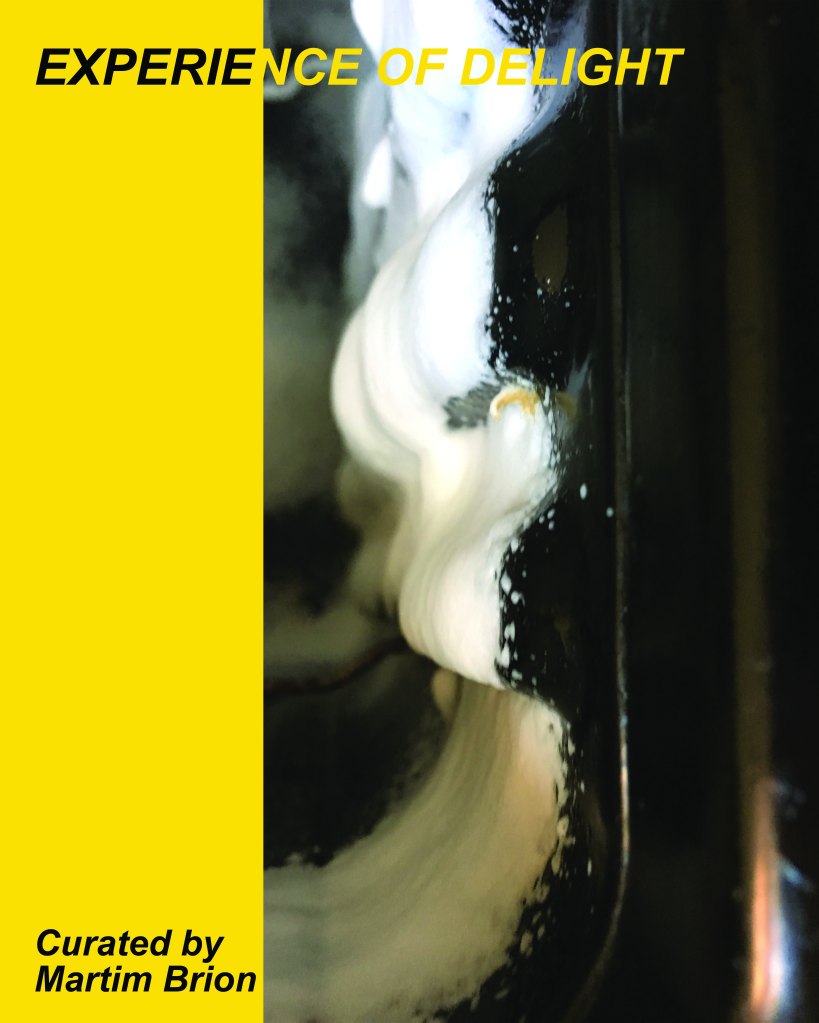
Experience of Delight
…Though no great minist’ring reason sorts
Out the dark mysteries of human souls
To clear conceiving: yet there ever rolls
A vast idea before me, and I glean
Therefrom my liberty…
John Keats: “Sleep and Poetry”
The title is a reference to Robert Ryman’s view that art should provide such an experience. Not like a warm bread roll, but rather a sense of fulfillment and joy derived from observation and lived experience. I would also add critical thinking and dialogue to this.
This trio of exhibitions is about that: the need to be exposed to experiences; to lead a curious and searching life, and to engage in open questioning and learning. This is something I feel is lacking in current artistic experiences. There is too much focus on tropes of the past, clichés, and ready-made ideas (there is a big gap between concept and object – just ask Duchamp).
The focus is on visual dialogue between figurative and abstract art. This is a necessary dialogue which often does not take place due to the preference for a more streamlined or narrowly focused view of art. Figuration, has always been up until the 20th century the main mode of artistic expression. But since then, abstraction has gained track, achieving equal or even surpassing figuration as the representative of Art. This has led to a relationship between the two approaches, which is similar to a pendulum. And this pendulum swings widely. Not that there is no dialogue or artists that bridge the gap, there are and I believe increasingly more so. But the preference in terms of artistic dialogue is for similarity. Even within the artistic community, one can notice the preference for one or the other, and that there is a strong reticence to bridge the gap. But art is about critical thinking, about dialogue, about confronting the other, in juxtaposing things or opinions that are apparently disparate but that when looked at from a different point of view, do have points in common, or still do not, but that is also fine or even of importance that that is so (again, back to the critical thinking). In order to think critically one needs to question, and to question one needs to connect contrasting things and approaches and analyse and observe the results, and from these, build onwards.
The intention is to pair works, establishing a dialogue between them and throughout the exhibition as a whole — concentric dialogues. We advance in circles, rolling back and forth until we reach our final destination: the starting point. At times one does not really know how it comes about, this creative dialogue, but one needs freedom and tolerance in order to be able to risk doing so. At the risk of being repetitive; this freedom and dialogue are key to bridging the gap between figuration and abstraction. There is no right or wrong way of doing so, there’s only trial and error.
Martim Brion, Munich, 2025
 Martim Brion